
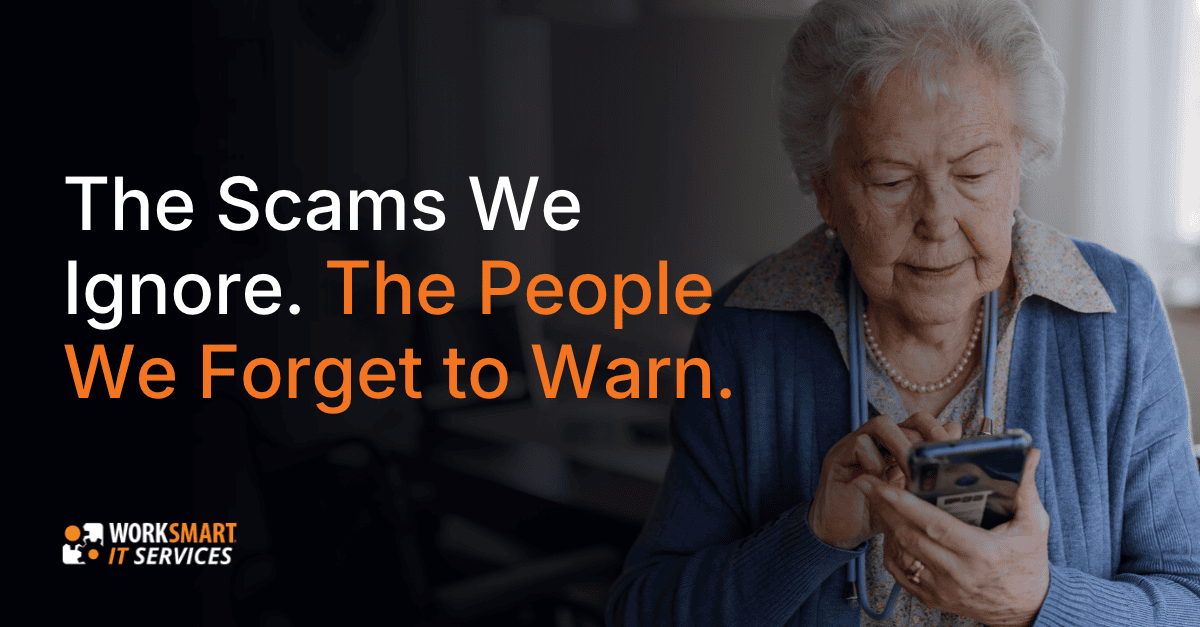
We know how to spot suspicious emails and fake text messages. But are we doing enough to help the older people in our lives recognize them, too?
Most of us have received a suspicious text message. Maybe it’s a notification about an unpaid toll, a package that couldn’t be delivered, or a message from an unfamiliar number asking, “Hey, is this Sarah?”
We recognize the pattern, delete the message, and move on.
But what if that same message reaches someone who doesn’t recognize the warning signs? Someone who lives alone, doesn’t have many people checking in, or simply enjoys having someone new to talk to?
A recent encounter made me realize how differently we experience the same digital world, and how important it is to share what we know with the people who may need it most.
A Conversation That Stayed with Me
I recently met an elderly woman I’ll call Hazel.
Hazel lives alone. She doesn’t have much family nearby, and many of the people she’s known throughout her life are no longer around.
During our conversation, she excitedly told me she was in love.
She had been communicating with a man overseas who claimed to be a wealthy prince. She believed God had brought them together, and he wanted to marry her.
I was immediately concerned. I explained that people sometimes pretend to be someone they’re not online, especially when romantic relationships develop with strangers overseas. I encouraged her to be cautious and never send money or share sensitive information.
She assured me she hadn’t given him anything.
A little later, I stepped inside her home while she looked for a pen to write down my phone number. Suddenly, something playing on her cellphone caught her attention.
She stopped what she was doing and excitedly explained that a jewelry store was closing and giving away its inventory for free. She didn’t want to miss her chance.
Once again, I encouraged her to be skeptical.
But as our conversation continued, I began to wonder whether I was approaching the situation all wrong.
I understood why both situations were suspicious. To me, the warning signs were obvious. But for Hazel, one seemed to represent the possibility of love and companionship. The other was an exciting opportunity to get something special.
I couldn’t stop thinking about that difference.
What if simply telling someone to be careful isn’t enough? What if we need to understand why they might want to believe something before we can help them recognize when it’s dangerous?
Scammers Don’t Just Look for Information. They Look for Opportunity.
We tend to think of online scams as attempts to steal passwords, credit card numbers, or banking information. But many scams begin long before anyone asks for money.
The first objective may be to gain someone’s attention and trust.
According to the FBI, romance scammers use false identities to establish emotional relationships and may spend considerable time building trust before requesting financial assistance. They can also use information shared publicly on social media to better understand the people they target.
A public post might reveal that someone recently lost a spouse, celebrated a grandchild’s graduation, or lives alone. Other details may emerge gradually through conversations, allowing scammers to make their approach feel increasingly personal.
For someone experiencing loneliness, a stranger who regularly asks about their day may offer companionship. For someone concerned about finances, an unexpected prize might seem like welcome relief. For a devoted grandparent, a call from someone claiming to be a grandchild in trouble could trigger an immediate desire to help.
None of these reactions are unusual. They’re human.
And that’s what makes certain scams so effective.
Understanding What Might Make Someone Take the Bait
Not every older adult faces the same risks, and age alone doesn’t determine whether someone will recognize a scam. In fact, research from the Federal Trade Commission shows that older adults report losing money to fraud at a lower rate than younger adults. However, when older adults do report a financial loss, the amounts are often significantly higher.
| In 2024 alone, adults aged 60 and older reported approximately $2.4 billion in fraud losses to the FTC. |
Understanding someone’s everyday life can help us recognize which scams may be particularly convincing.
Companionship and connection. Someone who lives alone or has lost a spouse may welcome attention from a new online friend or romantic interest. Romance scammers can spend months building trust, expressing affection, and making promises before creating a reason they need money.
Free gifts and unbelievable bargains. Fake giveaways, closing-store promotions, and unexpected prizes may be designed to collect personal information, payment details, or fees. If someone has to pay to receive something supposedly free, that’s a warning sign.
A simple wrong number text. What starts as a polite exchange with a stranger can turn into an ongoing friendship. The FTC warns that scammers use these conversations to build trust before introducing fraudulent financial opportunities.
Concern for family members. A caller claiming to be a grandchild in trouble may create an urgent, emotional situation and demand money immediately. Scammers often pressure people to act before verifying the story.
Trust in familiar organizations. Fraudulent calls claiming to represent banks, Medicare, Social Security, or technology companies can sound convincing, particularly when the caller insists an urgent problem needs attention.
The common thread isn’t a lack of intelligence. It’s that scammers exploit things people care about, including relationships, security, generosity, financial stability, and family.
Artificial Intelligence Is Making Some Scams Harder to Recognize
Artificial intelligence is making some of these tactics even more convincing. Scammers can use AI to generate realistic messages, images, and synthetic voices.
The FTC has warned that criminals can use voice-cloning technology to impersonate family members during emergency scams. Imagine hearing what sounds like your grandchild’s voice saying they’ve been in an accident and urgently need help.
Would your first instinct be to question whether that voice was real?
That’s why traditional advice about suspicious spelling, unfamiliar phone numbers, or strange-sounding callers isn’t enough anymore.
We need to teach people to verify situations independently, even when the person or message seems convincing.
How to Talk to Older Loved Ones About Online Safety
For many of us, cybersecurity awareness comes through our jobs. We learn about phishing, suspicious attachments, password protection, and reporting questionable emails to IT.
But the cybersecurity training that works in an office may not be the best way to start a conversation with a 90-year-old parent or neighbor.
If we immediately tell someone they’re being fooled, we may make them less comfortable asking for help in the future.
Here are a few ways to make those conversations more useful.
Start with curiosity, not correction
Instead of asking, “You know that person is probably a scammer, right?” ask how they met, how long they’ve been communicating, and what they enjoy about the relationship.
Listen before offering advice. Understanding why an interaction matters to someone makes it easier to explain the risks without dismissing their feelings.
Explain how a scam actually works
Don’t assume everyone knows what a romance scam or phishing attempt looks like.
Explain how scammers build trust, impersonate familiar people, or create fake emergencies. Show examples of suspicious delivery messages, prize announcements, or wrong-number texts.
Practical examples are easier to recognize than technical terminology.
Establish a few simple safety rules
You don’t need to teach every cybersecurity concept. Start with habits that are easy to remember:
- Never send money, cryptocurrency, gift cards, or banking details to someone you’ve only met online or over the phone.
- If a caller claims there’s a family emergency, hang up and call the family member using a number you already know.
- Don’t engage with unexpected messages from strangers, even if they seem friendly or have the wrong number.
- Never pay a fee to claim an unexpected prize or giveaway.
- If someone pressures you to act immediately, keep a secret, or avoid talking with family, stop and check with someone you trust.
- If a bank, company, or government agency contacts you unexpectedly, verify the request using official contact information.
These habits don’t require technical expertise. They create an opportunity to pause before acting.
Make asking for help feel safe
Someone who fears being embarrassed, criticized, or treated as incapable may hesitate to mention a suspicious interaction.
Instead, make a promise:
“If you ever get a strange message, an unexpected offer, or a call that worries you, please ask me about it. I won’t judge you. We’ll figure it out together.”
That reassurance could make all the difference.
Check in regularly
Cyber threats continue to evolve, so one conversation shouldn’t be the last.
Ask about unusual messages, new online acquaintances, or promotions they’ve encountered. Share examples of common scams and remind them you’re available to help.
Regular conversations also build trust and companionship, making it easier for someone to speak up when something doesn’t seem right.
What If You Suspect Someone Is Already Being Scammed?
If you’re concerned that a loved one is communicating with a scammer, avoid reacting with anger or embarrassment.
Ask whether they’ve been asked for money, personal information, account access, or secrecy. Offer to help verify the person’s identity or investigate the offer together.
If money has already been sent, contact the bank or payment provider immediately. You can also report suspected fraud to the Federal Trade Commission at ReportFraud.ftc.gov or internet crime to the FBI’s Internet Crime Complaint Center.
The goal isn’t to assign blame. It’s to protect the person and make sure they feel comfortable accepting support.
One Conversation Could Make All the Difference
I still think about Hazel.
I don’t know whether the man she was communicating with ever asked her for money. I don’t know what happened with the jewelry promotion, or whether my warnings made much of an impression.
But I do know that the encounter changed how I think about cybersecurity awareness.
We spend a great deal of time learning how to protect ourselves online, especially in professional environments. We attend training, recognize suspicious emails, and learn to question unusual requests.
But how often do we share those lessons with the people outside our workplaces?
Our parents. Our grandparents. An elderly neighbor. A family friend who lives alone.
This week, reach out to an older person you care about.
Ask whether they’ve received any unusual messages or met anyone new online. Talk about common scams. Explain that photos and even familiar voices can be faked. Offer to help them verify anything that seems suspicious.
And make sure they know they can come to you without embarrassment.
We can’t prevent every scam or protect everyone from every risk. But we can make sure the people we love aren’t left to navigate an increasingly deceptive digital world without support.
Sometimes, the most meaningful form of cybersecurity awareness starts with a simple conversation.
Cybersecurity Is About Protecting People
At WorkSmart IT Services, we believe cybersecurity goes beyond protecting devices, networks, and business data. It also means helping people understand the risks they encounter and giving them the knowledge and confidence to make safer decisions.
We help organizations strengthen their defenses through layered cybersecurity, security awareness, and practical guidance designed to reduce risk.
Those same principles matter beyond the workplace.
If this article inspires you to have one conversation with someone you care about, that’s a meaningful place to start.
And if you’re looking to strengthen cybersecurity awareness and protection across your organization, we’re here to help.
Explore WorkSmart Cybersecurity Services
Sources and Further Reading
Federal Trade Commission. Protecting Older Consumers 2024–2025. December 2025.
https://www.ftc.gov/reports/protecting-older-consumers-2024-2025-report-federal-trade-commission
Federal Bureau of Investigation. Romance Scams.
https://www.fbi.gov/how-we-can-help-you/common-frauds-and-scams/romance-scams
Federal Trade Commission. Why It’s Not Rude to Ignore “Hi, How Are You?” Text Messages from Strangers. May 2024.
https://consumer.ftc.gov/consumer-alerts/2024/05/why-its-not-rude-ignore-hi-how-are-you-text-messages-strangers
Federal Trade Commission. Don’t Pay for a Prize (Scam). June 2025.
https://consumer.ftc.gov/consumer-alerts/2025/06/dont-pay-prize-scam
Federal Trade Commission. Scammers Use Fake Emergencies to Steal Your Money.
https://consumer.ftc.gov/articles/scammers-use-fake-emergencies-steal-your-money
Federal Trade Commission. Pass It On: Share What You Know. Stop Scams.
https://consumer.ftc.gov/features/pass-it
Federal Trade Commission. How to Avoid Imposter Scams.
https://consumer.ftc.gov/features/how-avoid-imposter-scams